
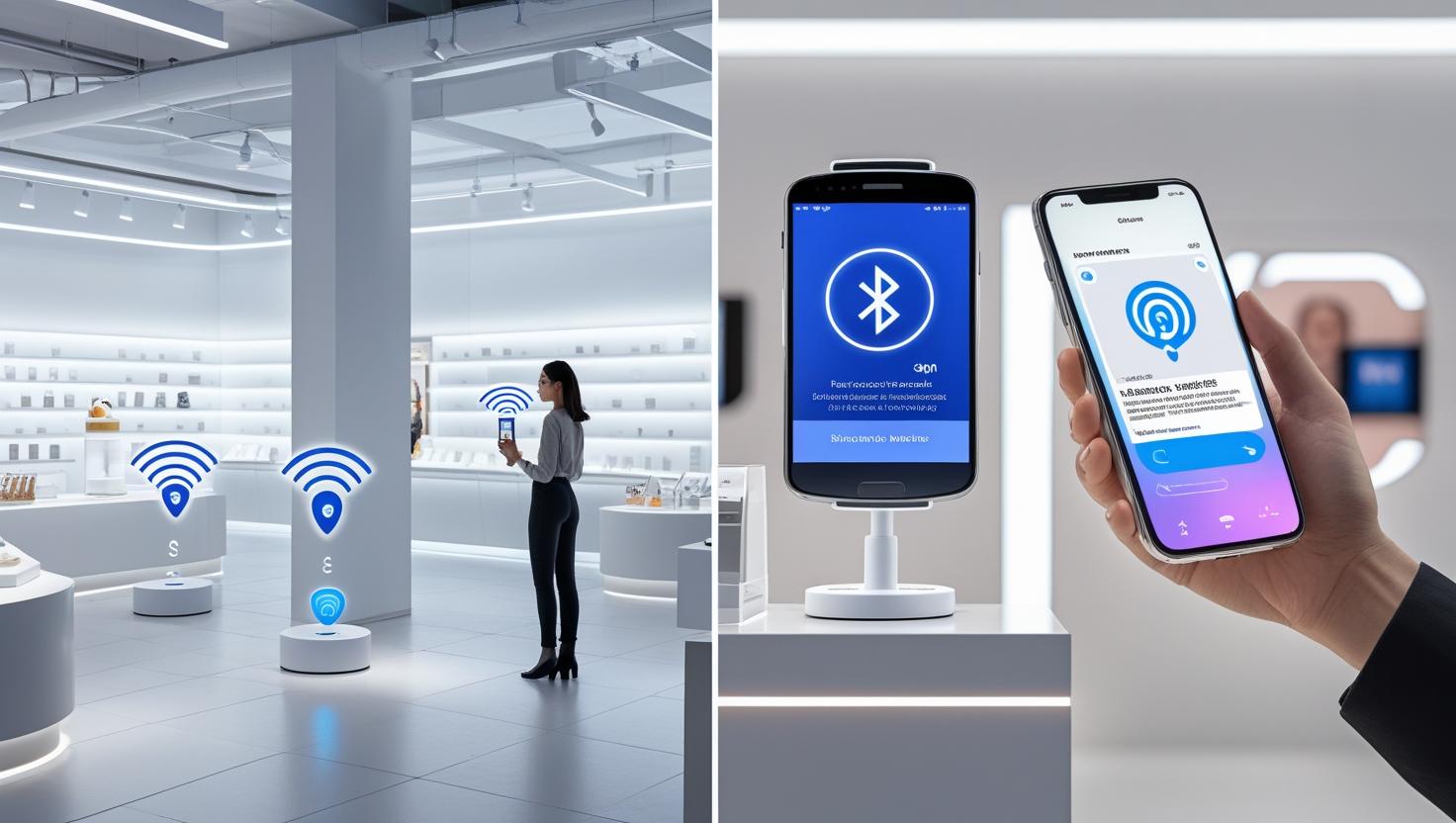
BLE (Bluetooth Low Energy) and NFC (Near Field Communication) are two popular wireless technologies used to create interactive customer experiences. Businesses use them for proximity marketing, contactless interactions, digital business cards, product information, and location-aware services. However, BLE vs NFC for marketing is not simply a choice between two wireless technologies. BLE is well suited to proximity-based experiences across larger areas, while NFC is ideal for intentional, tap-based interactions at a specific point.
What Are BLE Beacons?
BLE Beacons are small devices that broadcast Bluetooth signals to nearby smartphones. When a device with a relevant app enters the beacon’s range, it triggers an action—like pushing a notification or opening a specific app page.
Key Features:
- Extended proximity range: Some deployments can cover several meters or more, depending on the beacon and environment.
- Low power consumption: Battery-powered beacons can operate for extended periods.
- Multi-user engagement: Multiple compatible devices can detect beacon broadcasts.
- Indoor positioning: Supports proximity detection and certain indoor location applications.
- Marketing analytics: Integrated platforms can measure selected events, such as beacon detections and campaign interactions.
Common BLE Marketing Applications
- Location-based retail promotions.
- Shopping mall and airport navigation.
- Event engagement and visitor information.
- Museum guides and exhibition experiences.
- Proximity-based customer engagement.
What Is NFC?
NFC allows two devices to communicate wirelessly when placed very close—typically within 4 cm. It’s widely used in contactless payments, smart posters, and ID verification.
Key Features:
- Very short range
- No battery required
- Excellent for single-tap engagement like product info or digital business cards
BLE Beacons: Pros and Cons
Pros:
- Wide range and multi-user engagement
- Can work passively in the background
- Ideal for tracking and analytics
Cons:
- Requires app installation
- Needs regular maintenance (battery)
NFC: Pros and Cons
Pros:
- No power source needed
- Seamless user experience—just a tap
- Great for one-on-one, secure interactions
Cons:
- Very limited range
- Requires user action (tap)
- Less scalable for larger areas
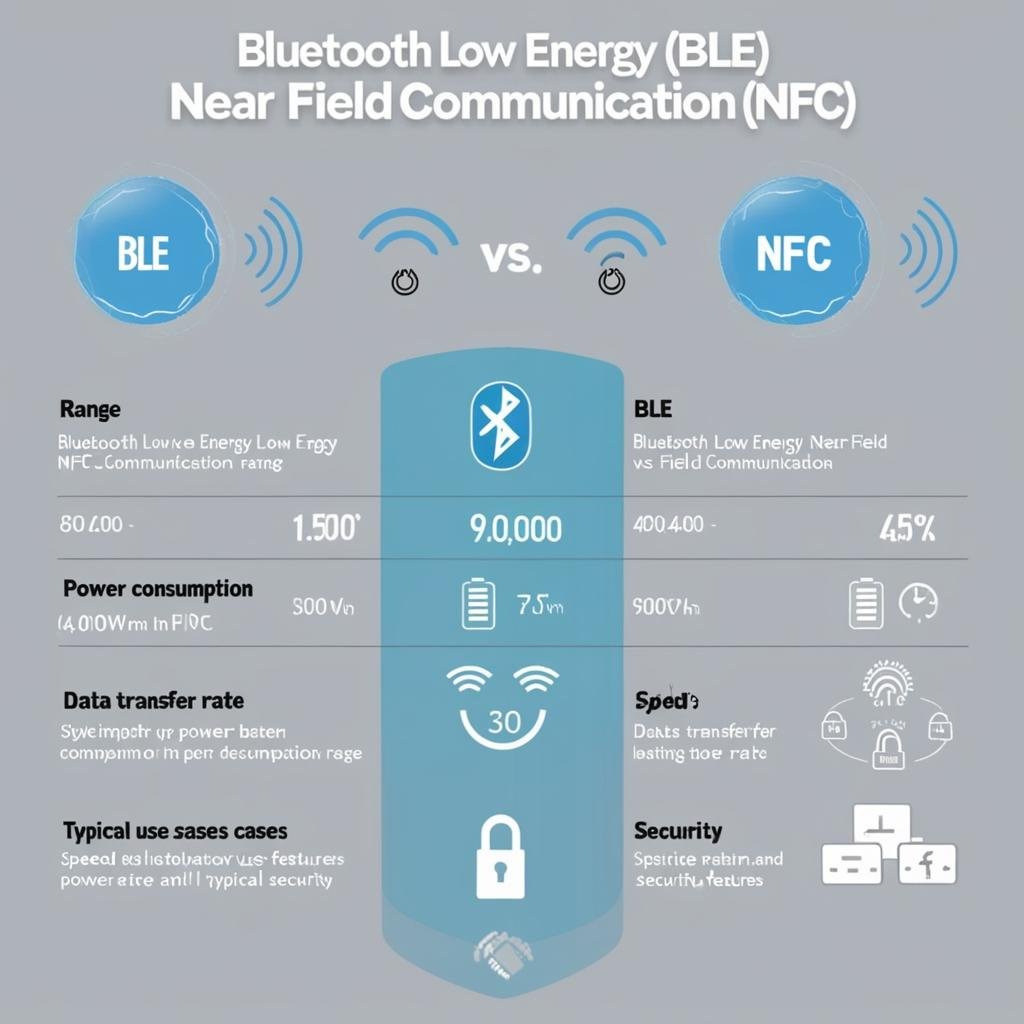
Which One Should You Choose?
If you need broad coverage, continuous interaction, and rich analytics, BLE Beacons are your best bet. They’re ideal for shopping malls, airports, and events.
However, if your focus is on quick, secure, and user-initiated actions, NFC is more suitable. It's perfect for product labels, business cards, and ticketing systems.
Can Businesses Use BLE and NFC Together?
Yes. Combining BLE and NFC can provide a flexible proximity marketing strategy.
For example, a shopping mall could use BLE beacons to support indoor navigation through a compatible app and NFC tags at individual stores to let customers tap for offers, product information, or loyalty registration.
This approach combines area-based discovery with direct, customer-initiated engagement.
Frequently Asked Questions
How Webyug Can Help
At Webyug Infonet LLP, we specialize in customized proximity marketing solutions using both BLE and NFC technologies. Whether you’re a retail store owner, event organizer, or product manufacturer, our team can design and implement tailored strategies that align with your goals.
- Bluetooth Beacon Solution — Learn about iBeacon and Eddystone beacon applications.
- Smart/Digital Contact Card Solution (NFC & QR Code) — Make professional contact sharing easier with digital cards that support NFC and QR technology for quick access across mobile devices.
Conclusion
Both BLE Beacons and NFC offer valuable features for proximity marketing. The best choice depends on your specific goals, environment, and user behavior. BLE is excellent for scalable, background-based marketing, while NFC excels in secure, one-to-one engagement.
Need help choosing or integrating the right tech? Reach out to Webyug Infonet LLP and let's make proximity work for your brand.