
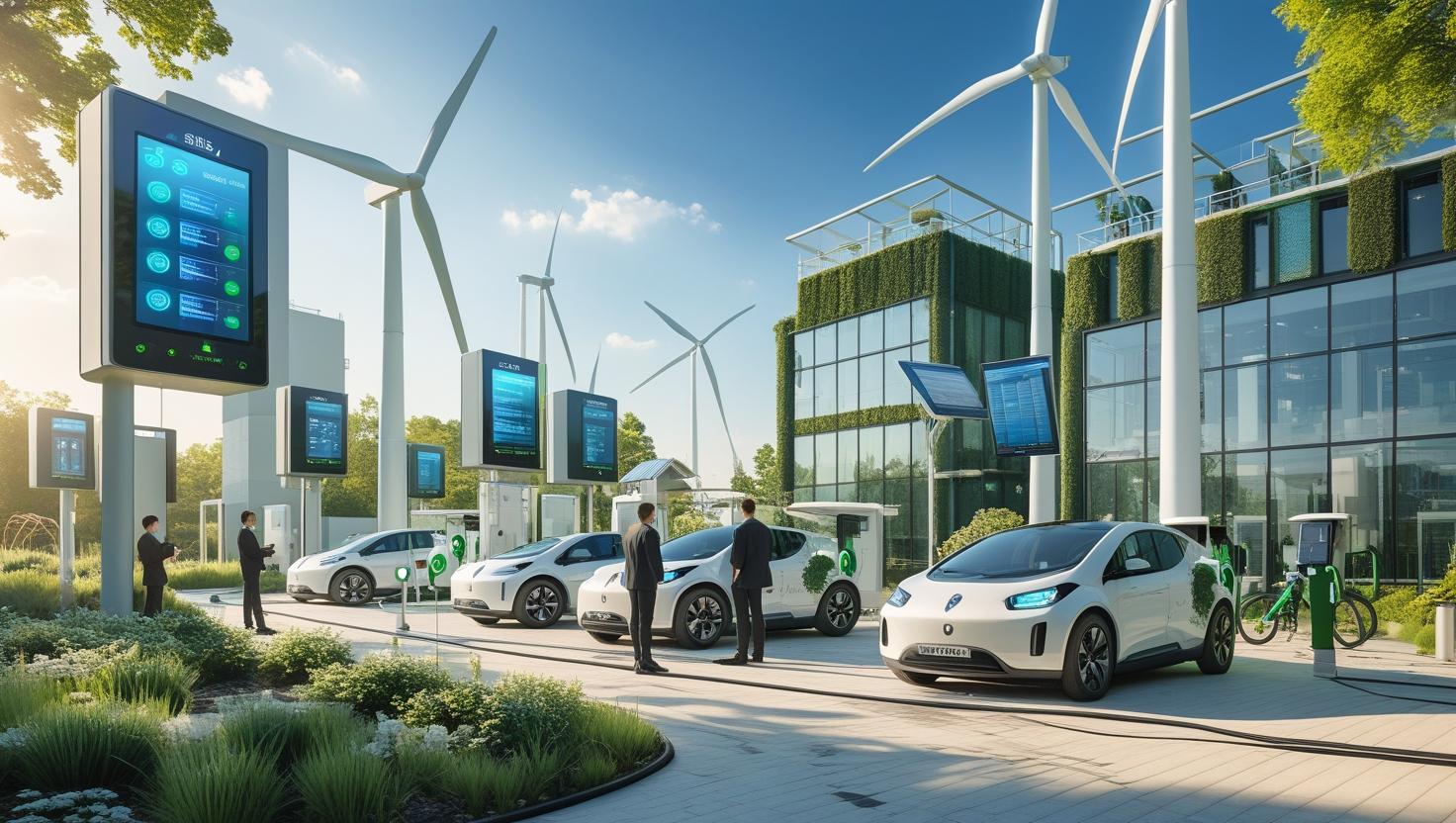
The Internet of Things (IoT) is transforming how businesses, cities, and communities approach environmental sustainability. By connecting devices, sensors, machines, and software platforms, IoT enables real-time monitoring, intelligent automation, and data-driven decision-making. These capabilities help organizations reduce energy consumption, conserve water, minimize waste, and lower their environmental impact.
What is IoT and Why It Matters for Sustainability?
IoT refers to a network of interconnected devices that collect and exchange data. These smart systems help organizations monitor, analyze, and automate processes. In sustainability efforts, IoT provides real-time insights that lead to reduced waste, lower emissions, and better resource management.
IoT matters for sustainability because it connects environmental data with practical actions. For example, a smart building can automatically adjust lighting based on occupancy, while an agricultural irrigation system can deliver water according to soil moisture levels. By improving visibility into resource consumption, IoT helps organizations reduce unnecessary usage, manage environmental risks, and support long-term sustainability goals.
Key Ways IoT Contributes to Sustainability
1. Smart Energy Management
IoT enables dynamic control of energy usage in homes, factories, and cities. Smart meters and connected devices monitor consumption patterns and optimize usage, cutting energy waste and emissions.
2. Efficient Resource Utilization
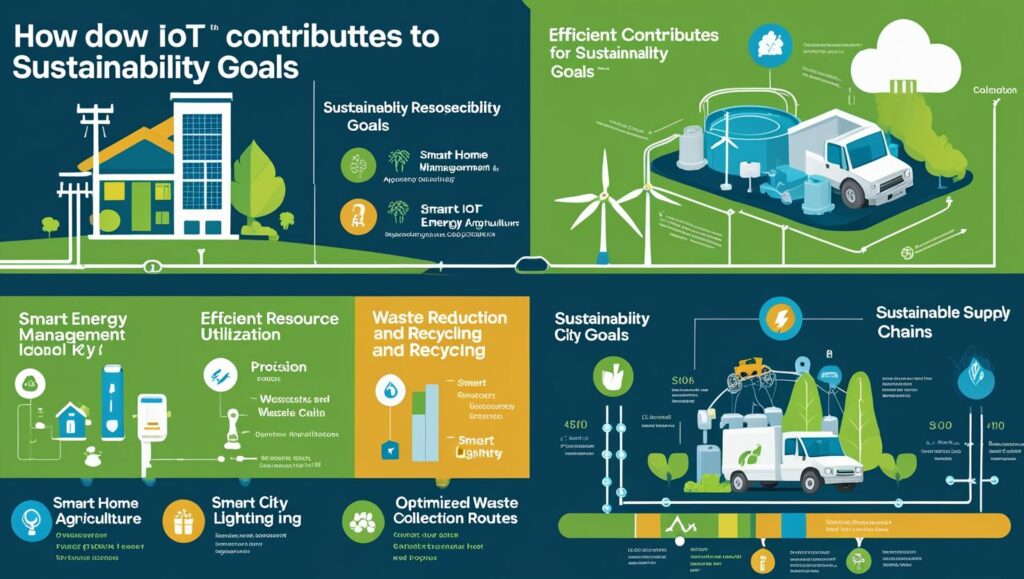
From water sensors in agriculture to smart lighting in cities, IoT helps reduce the overuse of precious resources. It ensures that energy, water, and raw materials are used precisely and only when needed.
3. Waste Reduction and Recycling
IoT sensors can detect when bins are full, monitor waste levels, and optimize collection routes. This reduces fuel usage and ensures proper recycling practices.
4. Sustainable Supply Chains
IoT enables real-time tracking of goods, helping companies reduce transportation emissions and streamline inventory. It also improves transparency in sourcing and manufacturing.
5. Air and Water Quality Monitoring
Environmental sensors measure air pollutants and water contamination in real time. This data supports faster responses to environmental risks and policy enforcement.
Real-World Applications
- Smart cities: Connected streetlights, parking sensors, traffic monitoring systems, and smart waste bins help municipalities manage urban resources more efficiently.
- Manufacturing: Equipment sensors track energy consumption, detect inefficient processes, and provide information for predictive maintenance.
- Agriculture: Soil sensors and automated irrigation systems help farmers manage water use according to crop and soil conditions.
- Transportation and logistics: Vehicle tracking, route optimization, and shipment monitoring help improve transportation efficiency.
- Water management: Smart meters and leak detection sensors help utilities and facility managers identify abnormal water consumption.
- Renewable energy: IoT monitoring systems help track solar panel performance, battery conditions, and energy production.
The Role of AI and Data Analytics in Sustainable IoT
IoT becomes more useful when the data collected by connected devices is analyzed effectively.
Artificial intelligence (AI) and data analytics can help identify patterns, detect anomalies, forecast resource demand, and recommend operational improvements.
For example, an AI-powered energy management system can analyze historical consumption, occupancy, and weather information to help optimize building energy usage. In manufacturing, predictive analytics can identify unusual equipment behavior before a failure occurs.
Challenges to Consider
Although IoT offers several sustainability opportunities, successful implementation requires careful planning.
Initial investment: Sensors, gateways, connectivity, software, and integration can involve upfront costs. Businesses should evaluate the expected benefits and total cost of ownership.
Data security and privacy: Connected devices can introduce security risks. Organizations should use appropriate authentication, encryption, access controls, software updates, and data governance practices.
Integration with existing systems: Legacy equipment and different communication protocols may complicate deployment. Compatibility should be assessed before selecting devices and platforms.
Connectivity and data reliability: Network interruptions, inaccurate sensors, and missing data can affect operational decisions. Monitoring and maintenance procedures are essential.
Electronic waste and energy consumption: IoT devices themselves require energy and materials. Sustainable deployments should consider device lifespan, repairability, responsible disposal, and the environmental impact of data processing.
Measuring actual impact: Improvements must be verified against a baseline rather than assumed from device installation alone.
Addressing these challenges helps organizations build IoT systems that are secure, reliable, cost-effective, and aligned with measurable sustainability objectives.
Future Trends in IoT and Sustainability
- AI-powered energy optimization: More intelligent systems will help organizations forecast demand and identify opportunities to reduce unnecessary energy use.
- Digital twins: Virtual representations of buildings, factories, or infrastructure can help teams evaluate operational scenarios and resource requirements.
- Edge computing: Processing selected data closer to connected devices can reduce response times and limit unnecessary data transmission.
- Smart grids: Connected monitoring and control systems can support grid visibility, demand management, and renewable energy integration.
- Predictive maintenance: Sensor data and analytics can help identify maintenance needs earlier and potentially extend equipment service life.
- Circular economy applications: Product tracking and connected asset monitoring can improve repair, reuse, recovery, and recycling processes.
Frequently Asked Questions
IoT helps achieve sustainability goals by monitoring resource consumption, automating operations, and identifying inefficiencies. It can support energy savings, water conservation, waste reduction, environmental monitoring, and more efficient supply chains.IoT helps achieve sustainability goals by monitoring resource consumption, automating operations, and identifying inefficiencies. It can support energy savings, water conservation, waste reduction, environmental monitoring, and more efficient supply chains.
IoT devices collect real-time data, while AI analyzes that data to identify patterns, forecast demand, detect anomalies, and recommend operational improvements. Together, they can support smarter energy management, predictive maintenance, and resource optimization.
A business can begin by identifying a specific sustainability challenge, establishing baseline measurements, selecting suitable sensors, connecting them to an IoT platform, and monitoring results through relevant KPIs. A pilot project can help validate the approach before scaling.
How Webyug Can Help
At Webyug Infonet LLP, we specialize in building IoT-driven solutions that empower businesses to reduce downtime and improve operational efficiency. Let us help you bring smarter maintenance to your operations.
- Custom IOT Solution — Custom IoT solutions connect smart devices to monitor data, automate tasks, and improve operational efficiency.
- Bluetooth Beacon Solution (Using iBeacon & Eddystone) — Bluetooth Beacon Solutions use low-energy Bluetooth technology (iBeacon and Eddystone) to deliver location-based notifications, personalized offers, indoor navigation, and asset tracking.
Conclusion
IoT is more than just a technological trend—it's a powerful tool for building a sustainable future. By leveraging connected devices and real-time data, businesses and governments can make smarter choices that align with global sustainability goals.
At Webyug Infonet LLP, we help businesses unlock the potential of IoT to achieve energy efficiency, optimize operations, and drive sustainable growth. Partner with us to create smart solutions for a better tomorrow. Talk to Webyug today and turn every tap into trust.