
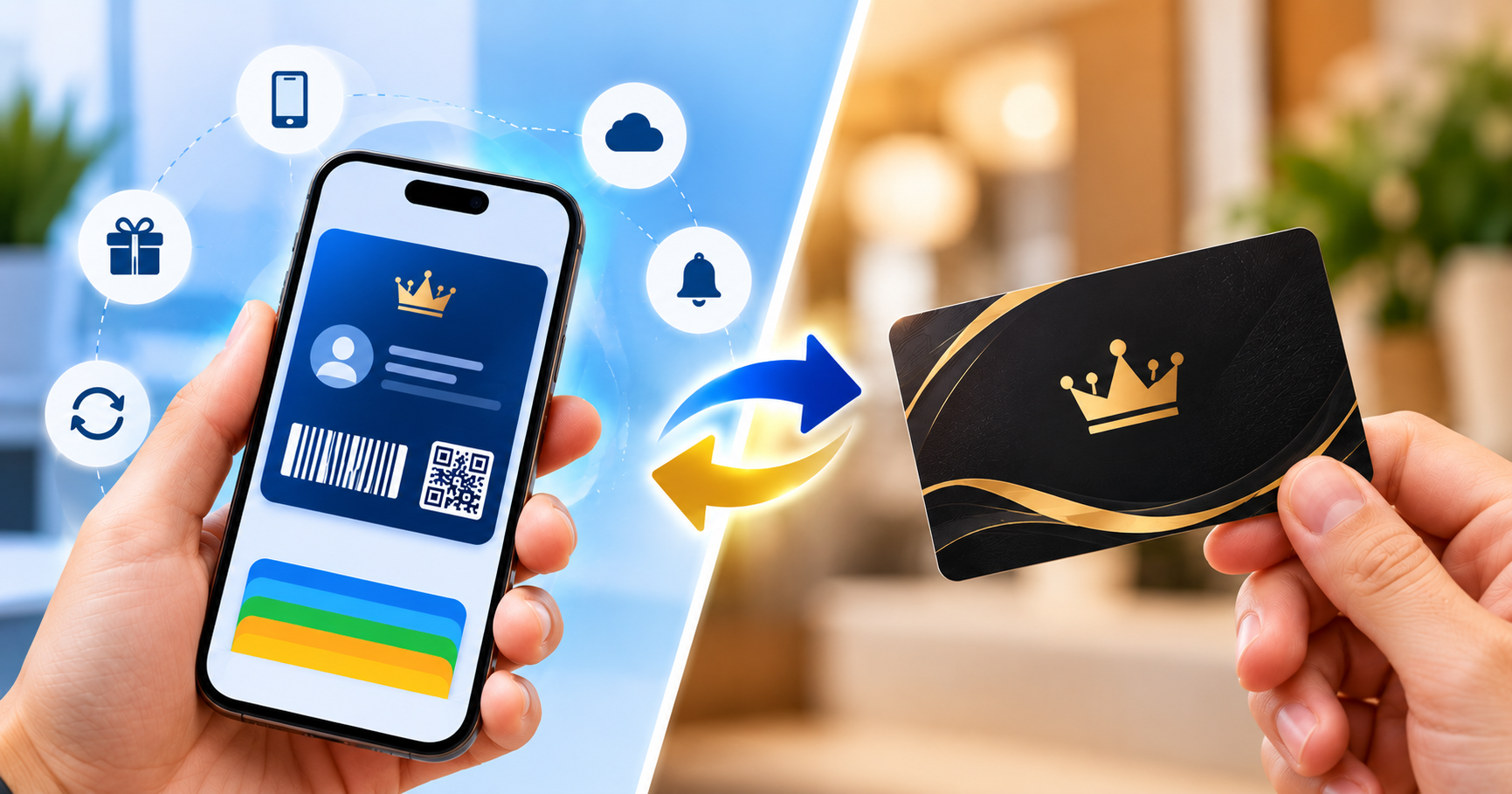
Compare digital and physical membership cards, their benefits, limitations, costs, and use cases to choose the right membership solution for your business.
This creates an important question: Should a business continue using traditional membership cards or move toward a digital alternative?
There is no single answer for every organization. The right format depends on how often membership information changes, how members check in, how the business manages renewals, and what type of experience it wants to provide.
This guide explains the differences between digital and physical membership cards, their advantages and limitations, and the factors businesses should consider before choosing one.
What Is a Digital Membership Card?
A digital membership card is an electronic membership credential that can be accessed through a smartphone or supported digital wallet.
Instead of receiving a plastic card, a member receives a digital version containing relevant information such as:
- Member name
- Membership number
- Membership level
- Expiration date
- Profile information
- Benefits or privileges
- QR code or barcode
- Links to relevant services
Depending on the implementation, the information displayed on the credential can be connected to a membership system and changed when the member's status changes.
Digital wallet technologies such as Apple Wallet and Google Wallet can provide a convenient place for members to keep these credentials.
What Is a Physical Membership Card?
A physical membership card is a printed or plastic credential issued to a member after registration.
It may contain:
- Member identification
- Card number
- Membership category
- Expiration information
- Organization branding
- Barcode or QR code
- Contact information
Physical cards are familiar and straightforward. Members can place them in a wallet and present them whenever they need to demonstrate their membership.
For programs where member information rarely changes, this approach can still be practical.
Digital and Physical Membership Cards: The Core Difference
The biggest difference is not simply phone versus plastic.
It is how the membership credential is managed after it reaches the member.
A physical card is generally a fixed object. If information printed on it changes, the organization may need to produce another card.
A digital credential can be designed to accommodate changing information. For example, membership level, expiry information, benefits, or other displayed details may be updated without producing another physical card.
This distinction becomes particularly important for organizations with frequent renewals, multiple membership levels, recurring check-ins, or changing member privileges.
Digital vs Physical Membership Cards at a Glance
| Factor | Digital Membership Card | Physical Membership Card |
|---|---|---|
| Access | Smartphone | Physical wallet/card |
| Updating information | Can support digital updates | Usually requires a new card |
| Replacement | Digital reissue or recovery | New card production |
| Distribution | Digital channels | Print, collection or delivery |
| Member convenience | Useful for mobile-first members | Familiar and simple |
| Operational work | Less physical handling | Printing and replacement required |
| Expiry management | Can reflect current status | Printed information can become outdated |
| Branding | Digital branded experience | Physical branded card |
| Verification | QR/barcode or other digital methods | Visual check, barcode or QR |
| Best fit | Frequently changing programs | Stable, simple programs |
The choice therefore depends on the operational needs of the membership program rather than simply whether the organization prefers digital technology.
Advantages of Digital Membership Cards
1. Information Can Stay Current
Membership information does not always remain the same.
A member might:
- Renew their subscription
- Move to another membership level
- Receive new privileges
- Lose an entitlement
- Change their account details
- Extend their membership period
With a physical card, these changes may require a replacement.
A properly implemented digital credential can make it easier to keep member-facing information aligned with the current record.
2. Members Can Keep Their Credential on Their Phone
People frequently carry their smartphones throughout the day.
Keeping a membership credential on the same device can reduce the need to remember another physical card.
This can be particularly useful for:
- Fitness centers
- Clubs
- Professional associations
- Retail membership programs
- Hospitality businesses
- Subscription services
- Educational communities
- Private organizations
Digital wallet passes can also be accessed without requiring the organization to build a separate consumer application.
3. Less Physical Replacement Work
Lost physical cards can create repetitive administrative tasks.
A replacement process may involve:
- Receiving the request
- Checking the member record
- Producing another card
- Updating the card number if required
- Delivering or handing over the replacement
A digital process can reduce some of this physical handling.
4. Easier Support for Different Membership Levels
Many programs have several categories.
A digital membership experience can be designed around these changing states rather than treating every card as a permanently fixed object.
5. More Opportunities for Ongoing Engagement
A membership credential does not have to be limited to identification.
Depending on the technology and implementation, it can also connect members with:
- Benefits
- Offers
- Renewal information
- Event details
- Important announcements
- Loyalty information
- Member services
This makes the membership credential part of the broader customer journey rather than just a proof-of-membership card.
Limitations of Digital Membership Cards
Digital does not automatically mean better for every situation.
Member Adoption
Some members may prefer traditional cards or may not be comfortable using digital credentials.
Businesses should therefore provide clear instructions during onboarding.
Smartphone Dependence
A digital credential normally depends on the member having access to their device.
Organizations should establish a backup procedure for situations such as:
- Dead batteries
- Lost phones
- Device changes
- Login problems
- Connectivity issues
Staff Training
Employees should understand how to recognize and validate a digital membership credential.
Without staff training, even a well-designed system can create confusion during check-in.
Implementation Requirements
A digital membership program needs appropriate technology, data management, validation methods, and member communication.
The transition should therefore be treated as an operational project rather than simply replacing a plastic card with a digital image.
Benefits of Physical Membership Cards
Physical cards still have several practical advantages.
Familiar Member Experience
People understand how a physical card works immediately.
There is little learning required.
No Smartphone Required
A member can present the card without depending on:
- Battery life
- Mobile software
- Internet access
- Wallet configuration
Tangible Branding
Some organizations use membership cards as part of their brand experience.
A premium printed card can communicate exclusivity or belonging in a way that some members value.
Suitable for Stable Membership Programs
If membership information rarely changes and members only present the card occasionally, a physical option may remain practical.
Drawbacks of Physical Membership Cards
The main limitation is that the card is relatively static.
Lost Cards
A lost card generally needs to be replaced.
Outdated Information
If a member changes status after the card is printed, the information on the physical credential may no longer reflect the current account.
Production Costs
Organizations may need to manage:
- Card printing
- Design
- Inventory
- Packaging
- Shipping
- Replacement
- Disposal of outdated cards
When Should a Business Consider Digital Membership Cards?
A digital approach may make sense when several of these conditions apply:
- Members frequently use their credentials.
- Membership status changes regularly.
- The organization operates multiple locations.
- Members have different tiers or privileges.
- Renewals happen throughout the year.
- Lost-card requests are common.
- Staff need faster verification.
- The organization wants to reduce physical card handling.
- The business already has a mobile-first customer journey.
Digital membership passes are particularly useful when identity, access, status, and member information need to remain accessible and current.
When Can Physical Cards Still Make Sense?
A physical card can remain appropriate when:
- Membership details rarely change.
- Members strongly prefer printed credentials.
- The card is primarily symbolic.
- The organization serves members who may not use digital wallets.
- The card is part of a premium physical experience.
- Membership verification happens infrequently.
- The organization wants a simple transition-free process.
The important point is that digital transformation does not require every organization to eliminate physical cards immediately.
Could a Hybrid Membership Model Work?
Yes.
A business does not necessarily have to choose one format for every member
For example:
- New members receive a digital credential.
- Members receive instructions for adding it to their phone.
- Staff learn the digital verification process.
- Members who need a physical option can request one.
- The organization measures usage and support requests.
- The business gradually adjusts the balance between the two formats.
This approach can make the transition easier because members are not forced into an immediate all-or-nothing change.
How to Choose the Right Membership Card Format
Before changing your membership system, ask these questions.
1. How often does member information change?
If information changes frequently, a flexible digital approach may be more useful.
2. How many replacement cards are issued?
A high number of replacement requests can indicate an opportunity to reduce physical administration.
3. How do members check in?
Consider whether your existing process uses:
- Manual verification
- QR scanning
- Barcode scanning
- NFC
- Membership lookup
- Staff approval
4. Do you operate multiple locations?
Multi-location programs may benefit from a consistent digital credential that members can use across participating locations.
5. What do your members prefer?
Technology should solve a member problem rather than create another one.
Collect feedback before making a complete transition.
6. What does your current card system cost?
Look beyond the initial card price.
Digital Membership Cards Are More Than a Card Replacement
One important distinction is that a digital membership credential does not have to be a simple picture of a plastic card.
The smartphone can become another touchpoint between the organization and its members.
Wallet-based membership experiences can support member identity, status, benefits, validation, and renewal-related journeys.
How We Can Help Businesses Modernize Membership?
Webyug Infonet LLP can help businesses explore digital solutions for membership management and customer engagement.
A modern membership system can be designed around the organization's existing workflow rather than forcing every business into the same model.
Depending on requirements, a solution can include:
- Membership cards
- QR-based verification
- NFC management
- Loyalty integration
- Smart/Digital Contact Card Solution
The objective is not simply to remove a plastic card.
The objective is to create a membership experience that is easier to access, easier to manage, and more useful for both members and staff.
Frequently Asked Questions
A digital membership card is an electronic membership credential that members can access on a smartphone or supported digital wallet. It can contain information such as member ID, status, expiry date, benefits, and a scannable code.
Neither format is universally suitable for every organization. Digital cards can be useful when information changes frequently, members check in regularly, or the organization wants to reduce physical administration. Physical cards can remain suitable for stable programs and members who prefer printed credentials.
Membership Is Moving From Physical Wallets to Smart Wallets
Membership programs are evolving beyond traditional plastic and printed cards. As customers increasingly rely on their smartphones for everyday services, businesses are exploring digital membership experiences that are simpler, more accessible, and easier to manage.
Digital membership cards give organizations a practical way to bring member details, benefits, access, and verification into a mobile-friendly experience.
The future of membership is not simply about replacing a physical card. It is about creating a more convenient way for members to access their benefits while giving businesses a more flexible way to manage changing membership information.
How Webyug Can Help
We've helped businesses move from traditional loyalty cards to modern digital wallet experiences. Our solutions make loyalty programs mobile-first, easy to access, and more engaging while helping businesses connect with customers at the right time.
- Loyalty Solution (Wallet Pass Technology) — Give members convenient digital credentials they can store, access, and use directly from their mobile wallets.
- Membership Card (Wallet Pass Technology) — Build mobile-first loyalty experiences that help businesses deliver rewards, offers, and member benefits more conveniently.
- QR Code Management — Create and manage QR-based experiences for verification, access, customer engagement, and digital interactions.
- Smart/Digital Contact Card Solution (NFC & QR Code) — Enable instant contact sharing through NFC and QR-enabled digital cards.
Conclusion
Digital membership cards offer a flexible way to manage member information, benefits, verification, and renewals. Physical cards can still be practical for stable membership programs and members who prefer printed credentials. The right choice depends on your membership model, member preferences, and operational needs. Businesses can choose a digital-first or hybrid approach based on what works best for their members and staff. The goal is to create a membership experience that is convenient, manageable, and flexible. Talk to Webyug today to explore the right digital membership card solution for your business and create a more convenient, flexible membership experience.