
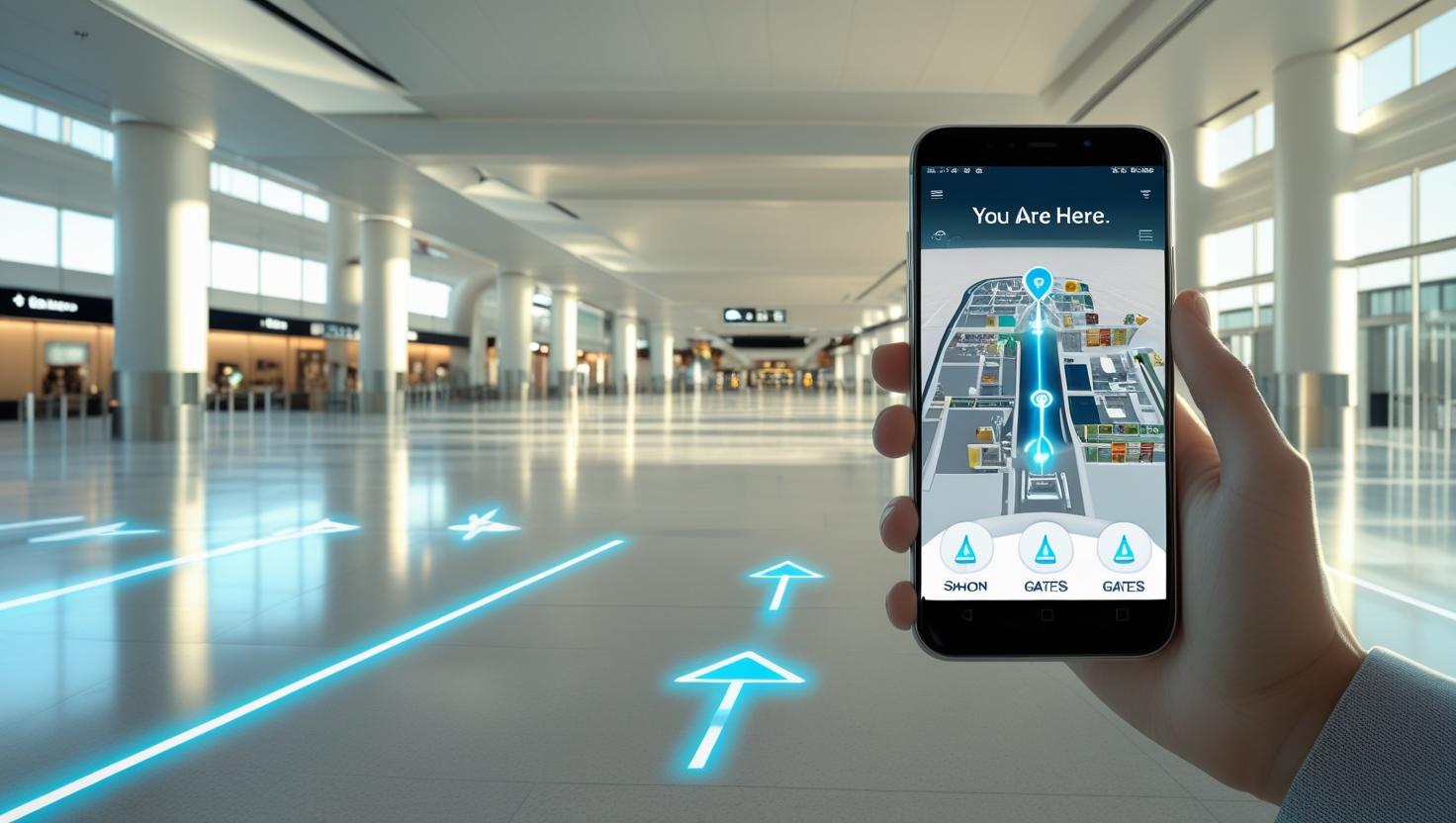
Bluetooth Low Energy (BLE) is transforming indoor navigation by helping people find their way through complex buildings where GPS signals are often unreliable. From hospitals and airports to shopping malls and corporate campuses, BLE-based indoor navigation systems provide location-aware guidance, improve visitor experiences, and support smarter facility management.
What is BLE and How Does It Work?
Bluetooth Low Energy (BLE) is a wireless communication technology designed for short-range data exchange with low power consumption. It is widely used in connected devices, proximity systems, asset tracking, and indoor positioning applications. BLE indoor navigation commonly uses beacons—small devices that periodically broadcast Bluetooth signals. Compatible smartphones or receivers detect these signals, and positioning software processes the available information to estimate a user's location or proximity.
Key Applications of BLE-Based Indoor Navigation
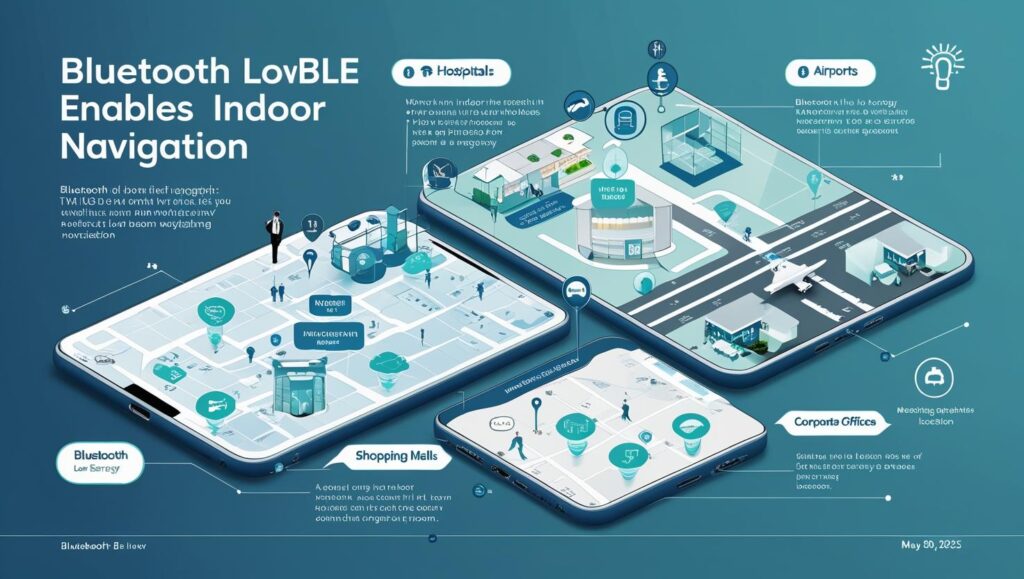
- Hospitals and Healthcare Facilities
BLE enables real-time navigation to departments, rooms, and emergency exits. It also helps track medical equipment and personnel. - Airports and Transit Hubs
Travelers can receive turn-by-turn directions to boarding gates, lounges, baggage claims, and check-in counters. - Shopping Malls and Retail Stores
BLE helps shoppers locate stores, special offers, and specific products. It enhances the overall customer experience. - Museums and Exhibitions
BLE-guided tours offer rich, contextual content based on the visitor’s location. - Corporate Offices and Campuses
It aids in finding meeting rooms, departments, and even navigating large campuses efficiently.
Why Choose BLE Over Other Technologies?
- Low Power Consumption: Beacons last months or even years without replacement.
- High Accuracy: BLE provides location accuracy within 1-3 meters.
- Cost-Effective: BLE systems are relatively inexpensive and easy to deploy.
- Cross-Platform Compatibility: Works on most modern smartphones with Bluetooth capability.
BLE Indoor Navigation vs. Other Positioning Technologies
| Technology | Common strength | Typical application |
|---|---|---|
| BLE beacons | Low-power proximity and positioning | Malls, hospitals, offices |
| Wi-Fi positioning | Can use existing wireless infrastructure | Large buildings and campuses |
| Ultra-wideband (UWB) | High-precision ranging with suitable hardware | Precision asset and personnel location |
| GPS | Outdoor positioning over large areas | Outdoor navigation and fleet tracking |
| RFID | Identification at supported read points or zones | Inventory and asset identification |
Challenges and Limitations of BLE Indoor Navigation
Although BLE is useful for indoor navigation, businesses should consider several challenges before deployment.
- Signal interference: Other wireless devices and physical obstacles can affect signal measurements.
- Variable accuracy: Location estimates can differ across rooms, devices, and building layouts.
- Infrastructure maintenance: Beacons require monitoring, and battery-powered units eventually need replacement.
- Application permissions: Users may need to enable Bluetooth and grant relevant permissions.
- Privacy considerations: Location data should be collected transparently, with appropriate consent, access controls, and retention policies.
- Integration complexity: Indoor maps, routing logic, mobile applications, and backend systems must work together reliably.
Frequently Asked Questions
How Webyug Can Help
At Webyug Infonet LLP, we are pioneers in building custom BLE-based indoor navigation systems tailored to unique business environments. From initial consultation to full-scale deployment, our team ensures precision, performance, and user satisfaction. We also offer analytics dashboards that provide insights into visitor movement patterns, enabling data-driven decisions for layout optimization and marketing.
- Bluetooth Beacon Solution — Learn about iBeacon and Eddystone beacon applications.
- Custom IoT Solution — Explore customized IoT application development.
Conclusion
BLE is no longer just a proximity tool—it's a game-changer in indoor navigation. As more businesses embrace smart infrastructure, BLE will continue to unlock seamless, interactive, and efficient indoor journeys.
If you're looking to integrate BLE navigation into your facility, Talk to Webyug today and turn every tap into trust.