

The Internet of Things (IoT) is transforming how people live, work, and interact with their surroundings. From smart home automation to intelligent transportation systems, connected devices help collect data, automate processes, and improve operational efficiency.As urban populations grow, cities increasingly rely on connected technologies to manage traffic, energy, public services, and infrastructure. IoT also plays an important role in asset tracking, helping businesses and public organizations monitor equipment, vehicles, and other valuable resources.
The Rise of Smart Homes - IOT
These technologies automate lighting, climate control, home security, and even grocery shopping—boosting both convenience and energy efficiency.
According to a report by Statista, the global smart home market is projected to reach over $230 billion by 2028. This shift illustrates not only the consumer demand for automation but also the increasing trust in interconnected ecosystems.
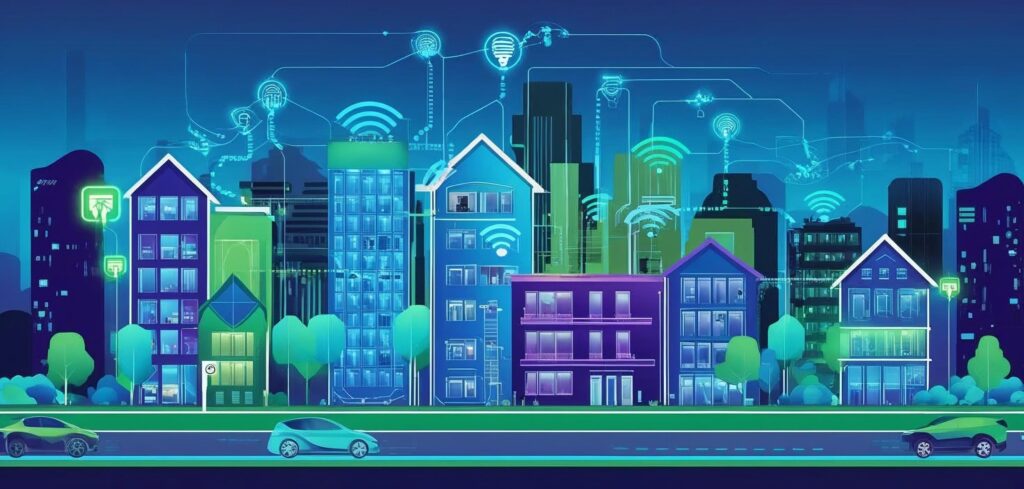
Beyond Homes: The Smart City Vision
Smart cities use IoT to collect and analyze data in real-time, enabling informed decision-making across urban services. Examples include:
- Traffic and mobility: Smart traffic lights and parking sensors reduce congestion and pollution.
- Public safety: Surveillance systems equipped with AI detect unusual activity instantly.
- Waste management: IoT bins notify municipalities when they need collection, optimizing routes and reducing costs.
- Utilities and energy: Smart meters and grids help monitor and control energy use, reducing waste and carbon emissions.
Cities like Singapore, Amsterdam, and Barcelona are already leading this transformation. According to IoT Analytics, the number of connected IoT devices is expected to exceed 30 billion by 2027, much of which will support smart infrastructure.
Asset Tracking: The Backbone of Smart Operations
A crucial, yet often overlooked, element in both smart homes and cities is asset tracking. Knowing the location, condition, and usage history of physical assets is vital for sectors such as logistics, construction, healthcare, and public services.
Asset tracking powered by IoT can:
- Prevent theft and loss of valuable equipment.
- Improve operational efficiency by reducing downtime.
- Enhance predictive maintenance through real-time data.
How IoT Asset Tracking Supports Smart Cities
IoT asset tracking can help municipal authorities and infrastructure operators manage resources across large geographical areas.
Public Transportation and Municipal Fleets
GPS-enabled tracking devices can provide vehicle location information for municipal fleets, service vehicles, and supported public transportation operations.
These systems can help teams monitor movement, review routes, and coordinate maintenance.
Public Infrastructure Management
Connected monitoring systems can help authorities maintain records of equipment such as streetlights, pumps, generators, and selected infrastructure components.
When combined with appropriate sensors, these systems can also provide condition information that supports maintenance planning.
Emergency and Public Service Equipment
Organizations can use asset registers and suitable tracking technologies to monitor the availability and location of selected emergency equipment and service resources.
The usefulness of these systems depends on coverage, device configuration, and integration with existing operational processes.
Waste Collection and Sanitation
Municipal operators can combine fleet tracking with connected waste-bin sensors to improve collection planning and monitor vehicle movements.
This can help coordinate resources more effectively when supported by reliable data and suitable route-planning software.
Challenges of Implementing IoT in Smart Cities
Although IoT offers significant opportunities, large-scale deployments require careful planning.
Connectivity and Infrastructure
Connected devices need suitable communication networks, power arrangements, and infrastructure. Coverage gaps can affect data collection and system reliability.
Cybersecurity and Data Privacy
Connected systems can expose sensitive operational or personal information. Strong authentication, access controls, secure communications, regular updates, and appropriate data-retention policies are essential.
Integration With Existing Systems
Smart city platforms may need to connect with legacy databases, municipal applications, and infrastructure systems. Interoperability should be considered during system design.
Implementation and Maintenance Costs
Costs include hardware, connectivity, installation, software development, device maintenance, and ongoing support. A pilot deployment can help organizations evaluate the practical benefits before scaling.
Data Quality and Reliability
IoT systems depend on accurate sensor readings and reliable communication. Organizations should establish data validation, device monitoring, and maintenance processes.
Frequently Asked Questions
How Webyug Can Help
At Webyug Infonet LLP, we specialize in providing cutting-edge asset tracking solutions tailored for both enterprises and municipal bodies. Our IoT-enabled systems offer:
- Asset Tracking Solution — Learn about digital asset tracking applications.
- Custom IoT Solution — Explore customized IoT application development.
Conclusion
The expansion of IoT from individual homes to entire cities is no longer a future vision—it’s today’s reality. As this evolution continues, the need for robust, secure, and scalable infrastructure becomes critical. Asset tracking is one of the foundational technologies enabling this transformation, ensuring that the physical world is just as intelligent and responsive as its digital counterpart.Talk to Webyug today and turn every tap into trust.