
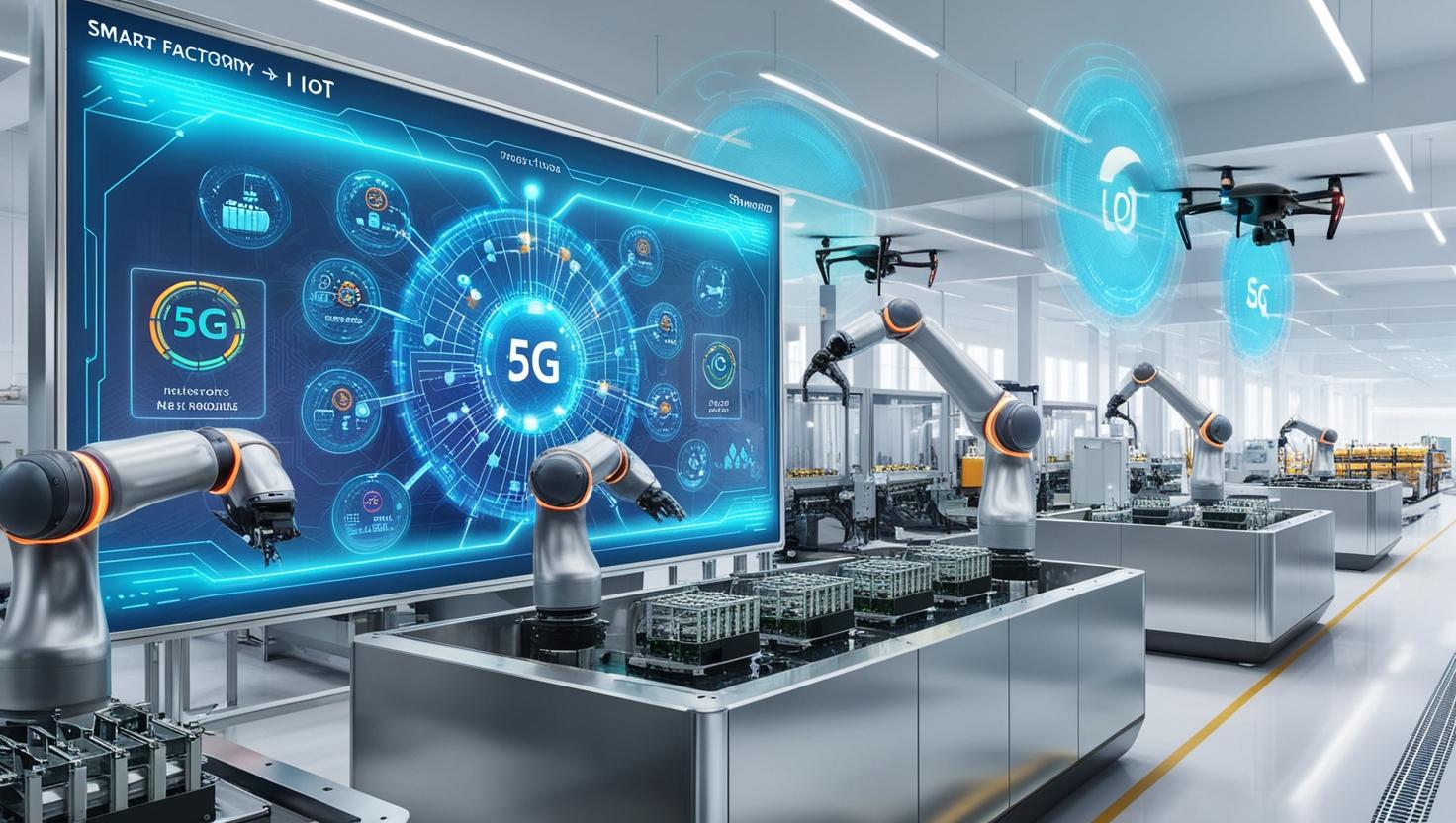
The combination of 5G and the Internet of Things (IoT) is transforming modern industries by enabling faster communication, real-time data processing, intelligent automation, and connected operations. From smart manufacturing and logistics to healthcare and energy management, these technologies help businesses improve efficiency, reduce operational downtime, and make data-driven decisions.
As industries move toward Industry 4.0, 5G-powered IoT solutions are becoming an important part of digital transformation. They connect machines, sensors, workers, and software systems to create smarter, more responsive industrial environments.
The Power of 5G in Industrial Environments
Unlike previous generations of wireless technology, 5G offers ultra-low latency, massive bandwidth, and real-time responsiveness. These features are critical for industries that rely on precision, speed, and seamless connectivity across devices and systems.
In manufacturing, 5G allows real-time machine monitoring and remote control of equipment. In logistics, it enables real-time tracking of goods and vehicles. And in healthcare, it powers instant data sharing between wearable devices and hospital systems—supporting remote diagnostics and faster patient care.
How 5G and IoT Work Together to Create Smarter Industries
5G provides a connectivity option for industrial IoT devices, while IoT sensors and systems generate the data that businesses need to understand and optimize their operations. Together with edge computing, cloud platforms, analytics, and industrial control systems, they can support more responsive industrial workflows.
For example, a temperature sensor on a production machine can collect equipment data. A suitable 5G network can transmit that information to an edge platform or central system, where software identifies abnormal readings. The system can then alert maintenance staff or trigger an approved operational response.
The actual performance depends on network coverage, device capabilities, system design, security controls, and application requirements. Not every IoT deployment needs 5G; Wi-Fi, Ethernet, LPWAN, and other technologies may be more suitable for certain use cases.
IoT: The Digital Nervous System
IoT devices act as sensors and communication endpoints within industrial setups. These connected devices collect and transmit data continuously, allowing organizations to monitor operations, predict maintenance needs, and ensure safety and compliance.
For example, in smart factories, IoT sensors can detect equipment malfunctions before failure occurs. In agriculture, IoT devices monitor soil conditions and automate irrigation. In energy sectors, they track power usage and optimize resource distribution.
Smarter Industries with 5G + IoT
When combined, 5G and IoT create a powerful synergy. 5G enables the massive, fast, and secure transfer of data generated by IoT devices. This real-time intelligence allows businesses to:
- Automate complex processes
- Reduce downtime through predictive maintenance
- Improve worker safety with wearable IoT devices
- Monitor assets across locations
- Enhance supply chain visibility
Real-World Applications of 5G and IoT Across Industries
Smart Manufacturing
Factories can connect production equipment, sensors, robots, and inspection systems to monitor operations and improve coordination. 5G may be useful for mobile equipment, machine vision, and other applications that require wireless connectivity and high data capacity.
Logistics and Transportation
Connected tracking devices and vehicle sensors can provide information about asset location, movement, and operating conditions. This data helps logistics teams improve fleet visibility, identify delays, and coordinate deliveries.
Healthcare
Connected medical devices and wearables can transmit relevant patient data to authorized healthcare systems. Depending on the application, connectivity can support remote monitoring and data sharing, but clinical use requires appropriate reliability, privacy, security, and regulatory safeguards.
Agriculture
IoT sensors can monitor soil moisture, temperature, and weather-related conditions. Automated irrigation systems can use these readings to manage water usage. 5G can support connected agricultural equipment in areas where suitable coverage is available.
Energy and Utilities
Connected sensors can monitor equipment status, energy consumption, and infrastructure conditions. These insights can help utilities identify unusual patterns, plan maintenance, and improve resource management.
Frequently Asked Questions
How Webyug Can Help
At Webyug Infonet LLP, we offer tailored solutions that integrate 5G and IoT technologies into your industrial processes. Our expertise helps businesses transition into smarter, more connected ecosystems—driving efficiency, innovation, and long-term growth.
- Custom IoT Solution — Explore customized IoT application development.
Conclusion
The future of industry is smart, connected, and data-driven. The fusion of 5G and IoT is not just a trend—it's a necessity for industries looking to remain competitive in the digital age. From smart factories to connected logistics, the opportunities are limitless. Webyug is committed to helping industries unlock the full potential of 5G and IoT with scalable, secure, and customized solutions. Talk to Webyug today and turn every tap into trust.