
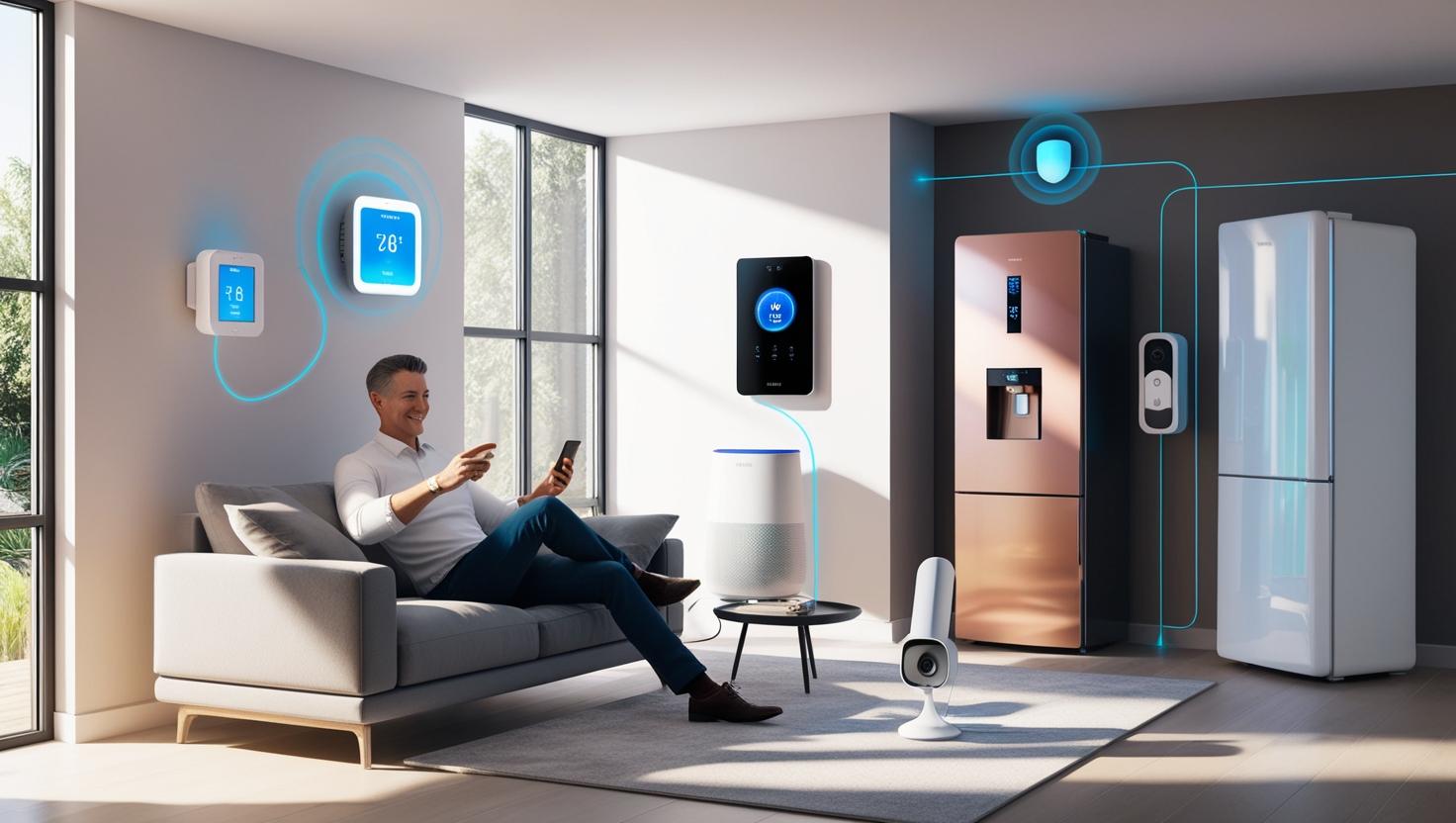
The Internet of Things (IoT) is rapidly transforming industries, smart homes, and daily life. As we enter 2025, IoT technology is evolving faster than ever—connecting devices, collecting data, and driving automation. From smart cities to AI-powered industrial systems, the possibilities are endless.
IoT systems can help organizations monitor equipment, automate routine tasks, analyze operating conditions, and make informed decisions. When combined with AI, edge computing, and cloud platforms, IoT can support faster responses and more intelligent business processes.
1. AI-Powered IoT Devices
Artificial Intelligence is enhancing IoT in 2025. Devices are becoming smarter, analyzing real-time data and making decisions on their own. AIoT (Artificial Intelligence + IoT) is the future, improving predictive maintenance, automation, and energy efficiency across sectors.
Webyug Infonet LLP develops custom IoT solutions tailored to your business needs—improving productivity and reducing operational costs.
2. Edge Computing at Scale
Edge computing is now essential for IoT. Instead of sending all data to the cloud, devices process data locally for faster response and lower latency. This is especially critical for healthcare, manufacturing, and autonomous systems.
We at Webyug Infonet LLP integrate edge computing into your IoT infrastructure to enable real-time insights and smarter decisions.
3. Enhanced IoT Security
With more connected devices, security risks have increased. In 2025, businesses are focusing on IoT cybersecurity, including encrypted communication, device authentication, and regular firmware updates.
Our team provides robust IoT security solutions that protect your data, infrastructure, and customers from cyber threats.
4. 5G-Driven IoT Networks
5G is revolutionizing IoT connectivity. It offers ultra-fast speed, massive device capacity, and minimal latency—perfect for real-time applications like remote surgery, smart factories, and autonomous vehicles.
At Webyug Infonet LLP, we build 5G-compatible IoT solutions that are future-ready and highly scalable.
5. Sustainable IoT Solutions
Green technology is a priority in 2025. IoT devices now help monitor energy usage, reduce emissions, and support sustainability goals for smart buildings, cities, and agriculture.
Webyug Infonet LLP develops energy-efficient IoT systems that align with your ESG targets and reduce your carbon footprint.
6. IoT in Smart Cities and Industries
Smart cities are no longer a concept—they are reality. IoT powers traffic systems, waste management, street lighting, and more. Similarly, Industrial IoT (IIoT) is optimizing manufacturing, supply chain, and asset management.
Our IoT experts at Webyug Infonet LLP deliver end-to-end solutions for smart city and industrial transformation.
Benefits of edge computing in IoT
- Lower communication delays: Supports applications that require fast local responses.
- Reduced bandwidth usage: Filters or processes data before transmitting it.
- Improved operational resilience: Some local functions can continue during temporary cloud connectivity interruptions.
- Better data control: Sensitive information can sometimes be processed locally.
- Scalable architecture: Distributes processing across devices, gateways, and central systems.
Smart-city IoT applications
- Intelligent street lighting: Adjust lighting based on schedules, occupancy, or environmental conditions where supported.
- Waste management: Monitor fill levels in connected waste containers.
- Water infrastructure: Track pressure, flow, and potential leaks.
- Environmental monitoring: Collect data on air quality and other local conditions.
- Infrastructure management: Monitor selected equipment and operational conditions.
Industrial IoT applications
- Machine monitoring: Collect operating data to improve equipment visibility.
- Asset tracking: Locate and manage equipment, tools, and inventory.
- Predictive maintenance: Use sensor data to help identify possible faults.
- Supply chain visibility: Track asset status and movement across facilities.
- Production analytics: Analyze operational data to identify bottlenecks and inefficiencies.
Frequently Asked Questions
How Webyug Can Help
Webyug Infonet LLP is a leading technology service provider offering customized IoT development, integration, and consulting services. We work with startups, enterprises, and government bodies to deliver innovative, secure, and scalable IoT systems.
- Custom IoT Solution — Explore customized IoT application development.
Conclusion
The IoT landscape in 2025 is full of innovation and opportunity. With advancements in AI, 5G, edge computing, and sustainability, businesses that invest in IoT today are building the foundation for long-term success. Partner with Webyug to turn your IoT ideas into impactful digital solutions. Talk to Webyug today and turn every tap into trust.