
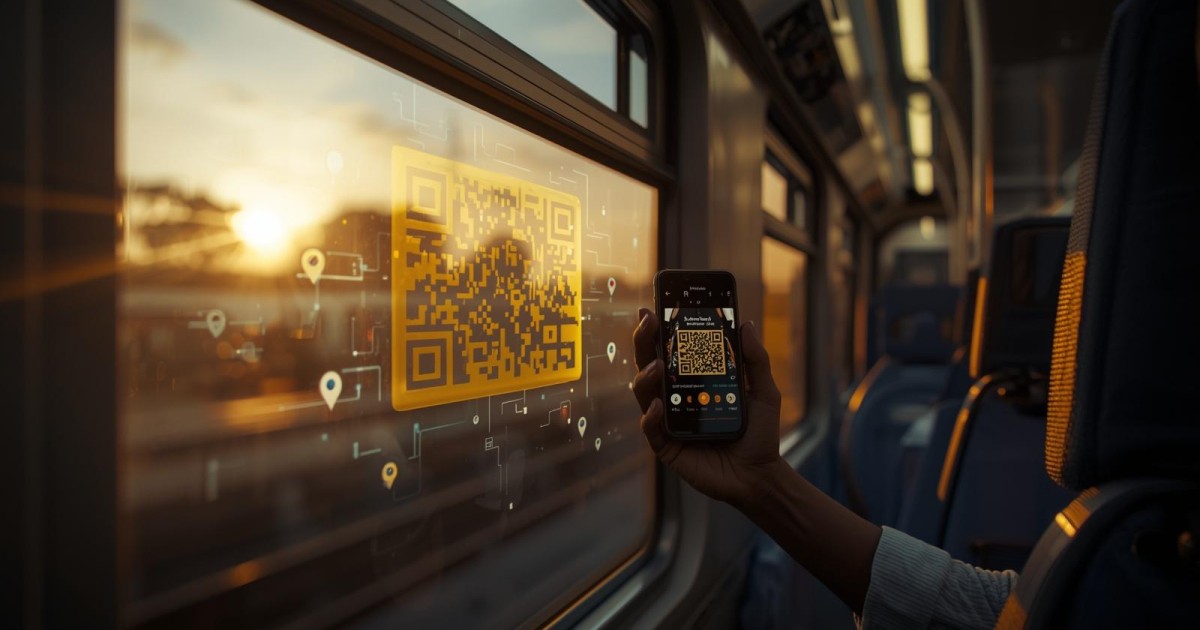
I once watched a CMO spend $250k on a glossy subway campaign, slap 30×30 cm QR codes on every panel, and declare victory because “scans were up 400%.” Two weeks later the funnel told a different story: 78% of those scans came from bots, 12% bounced in under two seconds, and the remaining 10% converted at 0.3%. The QR codes weren’t failing; the measurement was.
The Attribution Gap No One Mentions
Static QR codes are the marketing equivalent of a billboard on a desert highway—easy to print, impossible to interrogate. What changed in 2026 is that dynamic codes have quietly become miniature API gateways. Each scan negotiates TLS, hits an edge function, writes a row, and redirects in <120 ms. That sounds trivial until you realise it turns paper into a real-time telemetry surface.
The catch? Most teams treat the dashboard as a vanity scoreboard instead of an instrumentation layer. They count scans when they should be stitching sessions, devices, and downstream events into a single identity graph. Without that stitch, you’re optimising for the wrong micro-metric: scans instead of revenue.
Inside the Black Box: How Dynamic QR Systems Actually Work
The Redirect Chain
A dynamic QR payload is just a short URL—typically 24–32 bytes after compression. When the camera reads it, the phone fires a GET to an edge worker (Cloudflare, Vercel, AWS Lambda@Edge). That worker:
- Decrypts a signed JWT in the path to extract the campaign ID, publisher, and a nonce.
- Records anonymised headers (IP hash, OS, language) into a row-oriented store (ClickHouse, BigQuery streaming, or Timescale).
- Optionally calls a CRM or CDP to enrich the hash with a first-party cookie or device-graph link.
- Returns a 302 with Cache-Control: no-cache, Location: final destination.
Total latency budget: 80–120 ms worldwide if you colocate workers near major metros.
Privacy by Design
GDPR and India’s DPDP Act treat IP addresses as personal data. The simplest fix is to hash them with a daily rotating salt stored in a memory-only variable inside the edge worker. That still lets you count unique devices for 24 h without ever writing an IP to disk. Combine that with a deterministic session ID (HMAC of IP + UA + salt) and you can de-duplicate repeat scans without cookies.
Real-Time Stream Processing
We route the ClickHouse stream into Materialize so marketers can run sub-second SQL to detect anomalies—like scanning velocity suddenly jumping 10× in a single tram line (usually a prank sticker overlay). A 5-line policy triggers Twilio to quarantine the short URL and swap the destination to a warning page within seconds.
Closing the Loop with Offline Conversions
The holy grail is tying a scan to a purchase when the POS is offline. We issue every campaign a unique QR prefix; when the cashier scans the same code at checkout, the POS posts a SHA-256(payment_id + prefix) to an API. That hash can be matched server-side to the original scan event without ever exposing card data. In a recent convenience-store pilot we closed 92% of sessions end-to-end.
Three Campaigns That Actually Used the Data
1. Bengaluru Metro Pop-Up Retail
Streetwear brand NeonRoot printed 1,200 unique dynamic codes inside metro carriages. Instead of optimising for raw scans, they optimised for “dwell time >40 s on site + add-to-cart”. By A/B testing background colour (matte black vs neon yellow) and time-of-day targeting, they lifted qualified traffic 3.4× and cut CAC from ₹480 to ₹140.
2. IoT-Enabled Warehouse Flyers
Industrial supplier AxisBolts ships fasteners to 600 factories. They slipped QR-coded cards into every shipment. When the warehouse manager scanned, the edge worker checked GeoIP vs the ship-to address. If the delta exceeded 50 km, the system auto-generated a counterfeit alert and disabled the code. Counterfeit claims dropped 68% in two quarters.
3. Wallet-Pass Loyalty for Indie Cafés
A chain of 11 indie cafés in Pune used QR stickers on compostable cups. Scans installed a wallet pass (Apple/Google) that updated live with stamp counts. Because the pass itself carried a dynamic URL, every refresh pinged our servers—giving us real-time footfall without GPS. Weekend stamp doubles produced a 22% uplift in repeat visits within 14 days.
The Trade-Offs No Vendor Lists
- Latency vs. Richness: every extra API call (CRM, CDP, fraud) adds 20–40 ms. Go above 200 ms and scan abandonment spikes.
- Privacy vs. Precision: hashing IP daily limits identity resolution to 24 h windows—great for GDPR, bad for LTV models.
- Cost at scale: A popular campaign can generate 100M edge invocations/month. At $0.60 per million that’s still $60, but storage and analytics triple the bill.
- Sticker tampering: dynamic codes can be rotated, but only if the printer supports on-demand reprints. Most offset presses don’t.
How Webyug Can Help
Webyug’s engineers have deployed privacy-first QR infrastructure for retail, logistics, and IoT clients across APAC and Europe. We handle edge workers, stream analytics, and wallet-pass integrations so your marketing team can focus on creative, not compliance.
- QR Code Management — Dynamic generation, tamper-proof rotation, and real-time analytics at global edge scale.
- Loyalty Solution (Wallet Pass Technology) — Turn every scan into a living wallet pass with live updates and attribution.
- API & Webservice Development — Sub-100 ms redirect chains with JWT signing, fraud detection, and CDP hooks.
- Data Science & Big Data — ClickHouse, Materialize, and real-time anomaly detection for marketing and anti-counterfeit use cases.
Rethink QR as Telemetry, not Traffic
If your KPI stops at “scans,” you’re optimising a vanity metric. Treat each code as a distributed sensor: it should tell you who, where, when—and most importantly—what happened next. Architect the pipeline to answer that last question and paper becomes just another IoT endpoint in your stack.