
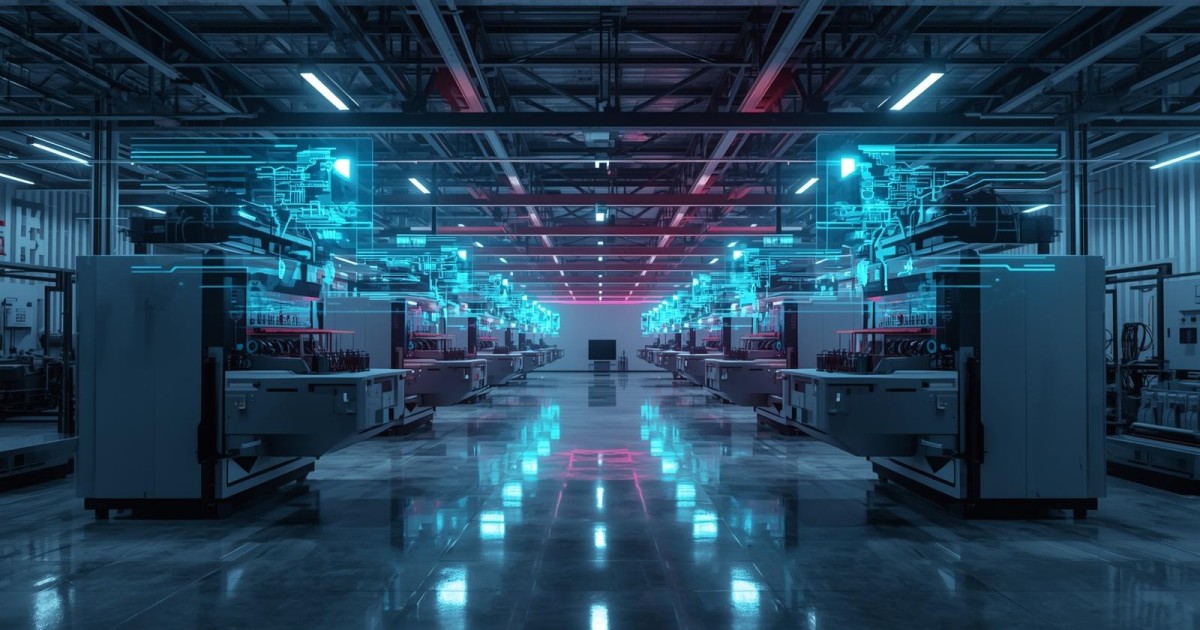
Global manufacturing lost $1.5 trillion to unplanned downtime in 2025—yet early adopters of industrial IoT cut those losses by 42% in just 12 months. As factories race toward Industry 4.0 maturity, 2026 is shaping up to be the tipping point where digital twins, edge-to-cloud analytics, and predictive maintenance move from pilot to profit center.
Why 2026 Is the Breakthrough Year for Industrial IoT
According to McKinsey’s latest 2026 IoT survey, 68% of global manufacturers now run at least one live digital-twin use case—up from 28% in 2023. Edge AI chips have fallen below $5/unit, LPWAN coverage exceeds 90% in OECD countries, and the Matter protocol finally unifies sensor onboarding across vendors. The result: industrial IoT deployments that used to take 18 months now go live in under 90 days.
Market pulse check (March 2026)
- Industrial IoT market: $1.2 trillion, 14% YoY growth (IDC)
- Average payback period for predictive-maintenance projects: 7.8 months (Rockwell Automation)
- Energy savings through digital twins: 18–22% (DOE Better Plants program)
- Thread-network-certified devices: 1,400+ SKUs (CSA consortium)
Architecting the Edge-to-Cloud Continuum
Modern smart factories no longer dump everything into the cloud. Instead, they orchestrate a three-tier architecture:
- Edge layer—real-time control (< 1 ms) via OPC-UA, MQTT, and Time-Sensitive Networking (TSN).
- Far-edge/On-prem micro-cloud—runs containerized digital twins and AI inference with GPU acceleration.
- Hyperscale cloud—aggregates anonymized data for fleet-wide model retraining and supply-chain analytics.
Protocol pick list for 2026
- MQTT 5.0—lightweight pub/sub for sensor streams; now supports request/response patterns.
- OPC-UA over MQTT—combines semantic modeling with low-latency transport; adopted by 62% of PLC vendors.
- Matter 1.4—extends Thread network into industrial lighting and HVAC, slashing commissioning time by 70%.
Digital Twins: From Pretty 3-D to Asset Intelligence
Digital twins have evolved beyond visualization. Gartner’s 2026 maturity model shows that closed-loop twins—those that automatically push optimized set-points back to physical assets—deliver 6.5× ROI versus passive dashboards. Key enablers:
- GPU-powered real-time physics solvers (NVIDIA Omniverse, Ansys Twin Builder).
- Self-healing Thread mesh networks with <1% packet="packet" loss="loss" for="for" telemetry="telemetry">
- Secure element chips that embed certificate lifecycle management ( Matter-compliant).
Industrial IoT Use Cases Delivering 2026 Value
1. Predictive Maintenance at Scale
Airbus deployed 22,000 wireless vibration sensors across its A320 assembly line. Edge ML models predict spindle failure 3.2 weeks in advance, cutting scrap by 28% and saving €41 million annually.
2. Energy-Aware Smart Factory
Siemens’ Amberg plant uses 1,400 digital twins to simulate every kWh before production starts. The result: 23% energy reduction without throughput loss, validating Germany’s €200 million Industry 4.0 subsidy.
3. LPWAN Logistics with LoRaWAN & NB-IoT
Maersk’s 2026 fleet of 380,000 refrigerated containers transmits location, temperature, and door-breach events every 15 minutes via dual-mode LoRaWAN/NB-IoT modems. Asset intelligence reduced cargo loss by 38% and shaved $120 million off insurance premiums.
Overcoming 2026’s Top Three Deployment Hurdles
1. Security Fragmentation
Despite Matter’s promise, 54% of brownfield plants still run Modbus RTU. Transition gateways that translate legacy serial to OPC-UA over TLS 1.3 now cost <$80, making phased upgrades viable.
2. Data Gravity
A single automotive paint shop generates 1.2 TB/shift. New edge-to-cloud orchestrators (e.g., Azure IoT Edge 1.5) compress and tier data, cutting egress fees by 67%.
3. Workforce Skills Gap
IDC predicts 4.2 million unfilled IoT roles by 2027. Manufacturers combat this with low-code ML platforms (Edge Impulse, SensiML) that let process engineers train models without Python.
How Webyug Can Help
Webyug Infonet delivers end-to-end industrial IoT solutions that shrink payback periods to under 8 months. Our certified engineers architect secure edge-to-cloud pipelines using MQTT, OPC-UA, and Matter over Thread, while our data-science team builds self-learning digital twins that turn sensor noise into asset intelligence.
- Internet of Things — Complete full-stack IoT development and deployment
- Custom IoT Solution — Tailored IIoT platforms with predictive-maintenance modules
- Asset Tracking Solution — LoRaWAN/NB-IoT tracking for indoor & outdoor assets
Conclusion
Industrial IoT is no longer an R&D experiment—it’s a board-level imperative in 2026. Manufacturers that combine digital twins, predictive maintenance, and edge-to-cloud architectures are already reaping double-digit downtime reductions and seven-figure cost savings. The window for fast followers is narrowing: secure your competitive edge by partnering with specialists who can deliver production-ready IIoT in weeks, not years.